

Thank you for Subscribing to Environmental Business Review Weekly Brief

 Allen Fugler, Jr., President, TermiTek, LLC
Allen Fugler Jr. is President of TermiTek, LLC, a research and development firm focused on termite technologies and risk management consulting. A pest management industry veteran, he has held leadership roles with Xterminator Pro, the Florida Pest Management Association, and Louisiana Pest Control Association. He is a patent holder, published co-author, licensed pest control applicator, and frequent industry speaker.
Year-Round Pest Control: The Future of Prevention, Protection and Environmental Stewardship
The U.S. pest management industry is increasingly moving toward recurring service models, yet many important pest categories—including mosquitoes, stinging insects, rodents, ants and overwintering pests—are still primarily managed through seasonal treatments.
A new approach is emerging: year-round pest management focused on prevention rather than reaction.
Instead of waiting for pest populations to increase and then treating the resulting infestation, pest professionals can maintain continuous protection designed to keep populations low throughout the year. Long-duration and passive technologies make this approach increasingly practical while allowing services to be integrated into established quarterly programs.
From Seasonal Treatment to Continuous Prevention
Pest populations do not necessarily disappear when a traditional treatment season ends. Mosquitoes can continue developing when conditions are favorable, while rodents, ants, spiders and overwintering insects can remain active or establish populations that expand when environmental conditions improve.
When protection stops, pest populations can quietly rebuild. By the time activity becomes obvious, populations may already be difficult to manage.
Year-round prevention changes the objective. Rather than responding to population growth, pest professionals can work continuously to prevent populations from reaching problematic levels.
This is particularly important for mosquitoes, where maintaining low populations can have implications beyond nuisance reduction.
Low Mosquito Pressure and Epidemiology
Mosquito management is also a component of public-health protection. Mosquito-borne viruses require competent vectors and sufficient mosquito populations to circulate effectively.
When mosquito pressure is kept low, the capacity for a virus to circulate within a population is reduced.
This does not mean that any individual trap or pest-control program can eliminate disease transmission. Effective vector management requires surveillance, source reduction, public education and multiple complementary strategies.
However, reducing mosquito abundance can remove an important part of the ecological conditions required for sustained transmission. Year-round mosquito prevention therefore has the potential to contribute to broader integrated vector-management and public-health objectives.
Making Year-Round Protection Practical
Traditional year-round pest control has often been challenging because conventional treatments can require frequent applications, technician labor, personal protective equipment and weather-dependent scheduling. This implies costs, use of trained and expert technicians and often the application of products that can present hazards for humans, pets or other non-target insects, such as pollinators.
Long-duration, low cost, simple of use, eco-friendly and passive technologies offer another option.
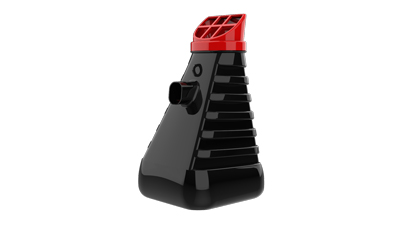
The EPA-recognized three-month duration of continuous control for the INZECTO Mosquito Trap illustrates how mosquito protection can be incorporated into established quarterly service cycles. The way the INZECTO Mosquito Trap works is quite original: it simulates the ideal breeding ground for female egg-laying mosquitoes and then kills adults and larvae, disrupting the natural life-cycle of the mosquito. Rather than chasing flying and biting adults by treating large areas with insecticides, the INZECTO Mosquito Trap counterintuitively attracts them to a controlled space. Its distinctive shape, color and scent make it so attractive that studies have documented that the introduction of one trap into an environment where four competing water containers are present reduces the number of eggs laid in the other containers by more than 80%. The mosquito entering the INZECTO Mosquito Trap to lay eggs does not realize the inner surface is coated with a microporous polymer embedded with both adulticide and larvicide. Just add water, place in a shaded area of the yard and it will be where mosquitoes that go for their last flight.Without any release of insecticides into the environment and without harming any other insects, the trap provides non-stop control for three months. Moreover, the intrinsic safety of the way the INZECTO Mosquito trap works is so evident that the EPA did not require or even recommend the use of any Personal Protective Equipment (PPE). This means reduced discomfort for the technicians, who are usually forced to wear heavy respirators, simplified training of the technicians, reduction of the time needed for a service and saving money on service delivery costs. The implications of such a method of control are very significant. Rather than creating an entirely separate mosquito schedule, technicians can now deploy INZECTO long-duration devices during routine visits, which supports a prevention model based on:
• Continuous protection between scheduled visits
• Reduced dependence on repeated chemical applications
• Integration with existing service routes
• Less disruption from weather conditions
• Earlier intervention before pest populations expand
The result is a shift from seasonal reaction to planned, year-round prevention. For the professional pest control industry, it represents a new business proposition to offer to their clients. For the public entities involved in vector control it represents the most entomologically efficient and cost/effective solution to an increasingly urgent problem.
Environmental Stewardship
Modern pest management must consider not only whether a pest is controlled, but also how that control affects the surrounding environment.
-
Instead of asking how to eliminate a pest problem after it develops, ask how to prevent the population from becoming a problem in the first place.
Traditional pesticide applications can result in movement beyond the intended treatment area and may create exposure opportunities for non-target organisms. Targeted, passive technologies can provide an alternative by concentrating control around the target pest instead of broadly distributing pesticides throughout an environment.
Reducing unnecessary pesticide applications can help minimize pesticide movement and potential impacts on non-target organisms, while still supporting effective pest management.
Material sustainability is another part of environmental stewardship. The INZECTO Mosquito Trap contains 15–50 percent recycled plastic and is 100 percent recyclable, providing an additional sustainability benefit within the pest-management process.
A Broader Pest-Management Strategy
The principles of year-round prevention can extend beyond mosquitoes. Rodents, ants, spiders, stinging insects and overwintering pests can also be addressed through strategies designed to prevent populations from becoming established or reaching high levels.
This represents an important change in the industry's mindset:
Instead of asking how to eliminate a pest problem after it develops, ask how to prevent the population from becoming a problem in the first place.
That approach benefits customers, pest professionals, communities and the environment.
The Future Is Prevention
Year-round pest control is more than a change in service frequency. It is a shift toward continuous protection, targeted intervention, public-health awareness and environmental responsibility.
Quarterly service cycles and long-duration technologies make prevention easier to integrate into existing operations. Targeted control can reduce unnecessary pesticide movement and potential exposure of non-target organisms. And for mosquitoes, maintaining low vector pressure can reduce the ecological capacity for viruses to circulate.
The future of pest management may ultimately be defined not by how aggressively populations are treated after they become established, but by how effectively they are prevented from reaching that point.
Year-round protection is prevention in practice—and prevention is the foundation of modern pest management.
